
Take Your Cat Dancing
"When you get the choice to sit it out or dance — I hope you dance."

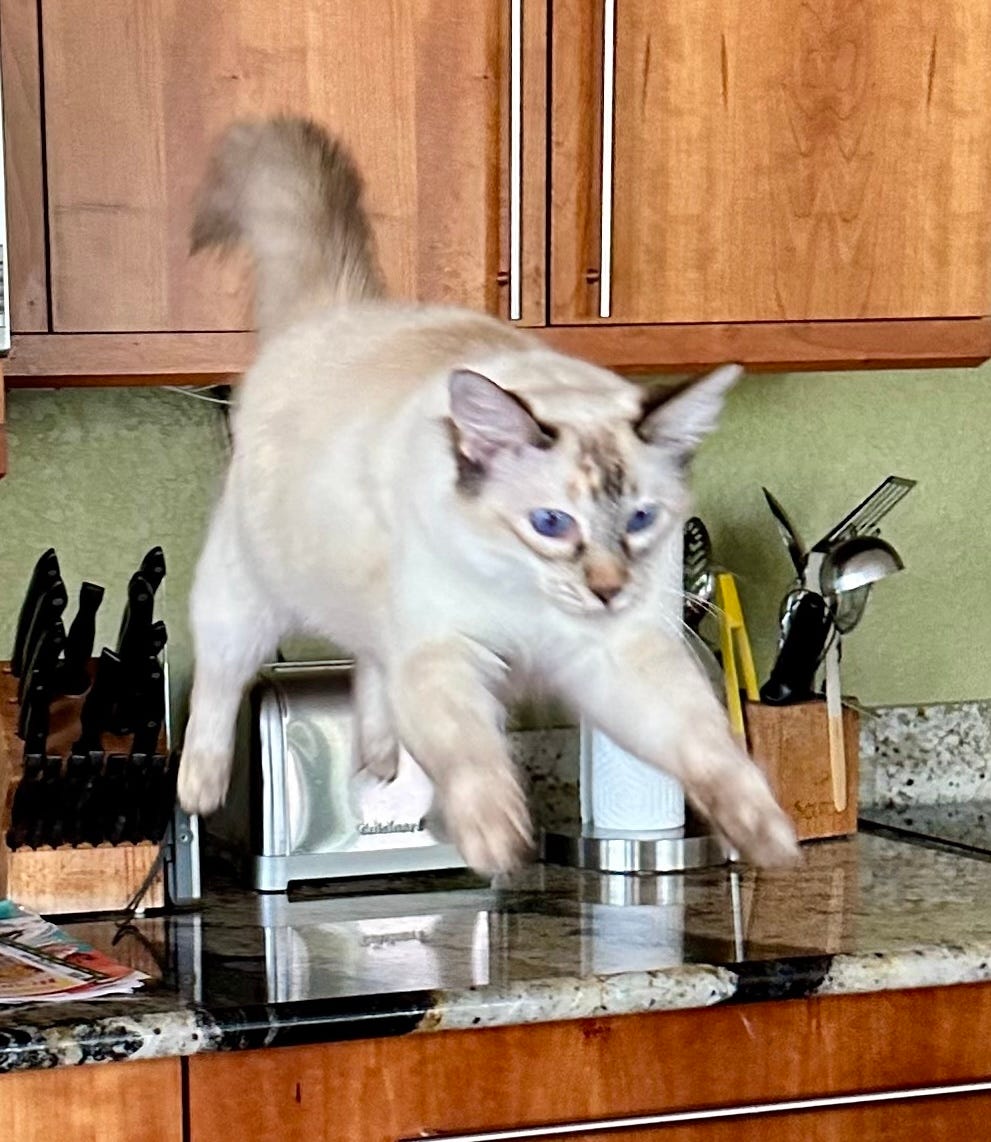
Swing dancing is a huge part of my cat behavior philosophy1. When my father died, I had a seismic realization: I left my house so rarely that one day I would die there and it might take years for the neighbors to notice anything amiss. I feel so sorry for the poor person who’d have to discover my mummified remains. My poor future cats, forced to make do with dead corpse me instead of fancy feast.
I wanted to get to know more people. Maybe I could learn how to relate to them socially. Normal ones, not clients. (I’d once told a client they were using insane troll logic. I wanted to stop doing stuff like that in particular.) I wanted to learn to go with the flow, to just accept things, to choose what to interfere with. I researched a lot of different meet-up activities. Tai chi? Yoga? A bunch of sports looked interesting, however, an uncharitable observer might call them antisocial. Like hiking. Mummified remains out in Big Bend.
I wanted to become an active participant in my own life, to make my own choices, challenge myself and get used to being uncomfortable sometimes. Martial arts appealed to me because you’re forced to interact with someone else, and there are rules of engagement. In the end I landed on swing dancing, though. Because I wanted to talk to people, not hit them. Or be hit. I get enough of that at home with my cats already.
In the beginning, my mother had to push me out the door while I whined, “No! I don’t want to!” every night. She would answer, far too reasonably: “This was your idea. You said you didn’t want to be a shut-in and a mummy. So get out there.” I still need my mother to keep me from chickening out now and then. Making active choices is hard. Even now, I’m far more comfortable spending a whole deejay set listening to some swing dancer tell me about what a good boy their dog or cat is than actually dancing.
In partner dances, one person leads and the other follows. That might sound obvious, but hear me out. It doesn’t mean that the lead gets to make all the decisions, set the plan, and dictate what the follow is allowed to do. Pro tip that applies to humans and cats alike: both participants have a voice. To illustrate:
The lead says “How would you feel about doing a spin?”
The follow says “Sure, I’d love a spin! On second thought, I’d prefer two, please,” and then leaves their arm up and takes another spin.
The lead then has a choice: go along with it or force their arm down to abort that stolen spin. Follows have opinions about this sort of dancing, opinions that tend to become common knowledge before the end of the night. Not every lead can find a dance partner, and they wind up dancing by themselves. What a shame when that happens.
Or:
The human says, “Surprise! I got us a Robobox!” And waits to see what the cat thinks of this development. Cats have strong opinions about their litterboxes. That opinion might be “Um, okay, whatever,” or “No, thank you, I would prefer you keep my regular sandbox clean instead of forcing me to jump into the trash compactor from the Death Star.” The human has a choice: respect their cat’s decision before the whole situation escalates and Tiger is forced to get creative. What a shame when that happens.
I thought for a long time about what kind of dance teacher I wanted to be. I’ve had many dance teachers. The best ones make dancing feel like kindergarten. Accept that you’ll fail a lot and be okay with it. Play well with others, don’t step on anyone if you can help it, and don’t be a jerk.
And then there are the other kind. The teachers who yell when you can’t execute a move just by watching it once. The ones who believe dancing is a very serious business. Anything that doesn’t follow the rules of that particular dance is an F-. How dare you even suggest the possibility of new steps. “There are no new steps!” That second spin? An abomination. You should be shunned.
Cats dance. All the time, but only in their own time, and only as the spirit moves them. But they don’t execute. They decide when to move and when not to. Cats are just like people: they’re more likely to be motivated if there’s some skin in the game. If you give them a choice, they get to decide whether they want to do it or not. Or sometimes you can trick them into thinking it was their idea in the first place.
If you take a dance class from me, you might find it odd that I give out treat rewards to my students. If they make choices and try things, I’ll give them extra, especially if they crash and burn and try again. I find a little positive reinforcement very motivating myself.
I’m a cat behaviorist. Yep, really.
I love your description of the robobox, my three cats own two!